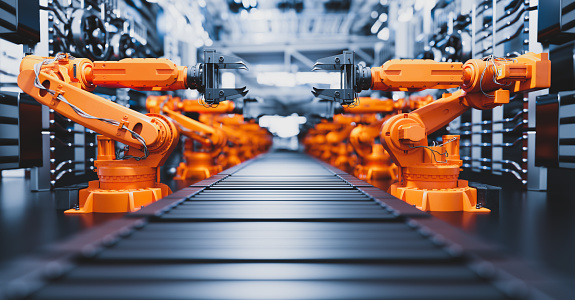
Visual Representation: The Future Of Food Production With AI Technologies
We’re facing a monumental challenge: how do we feed a global population projected to hit nearly 10 billion by 2050, all while grappling with climate change, dwindling arable land, and increasingly scarce water resources? Traditional agricultural methods, while foundational, are already straining under the pressure. Yields are plateauing in many regions, supply chains are vulnerable to disruption, and food waste remains an epidemic.
This isn't just an abstract future problem; it's a pressing reality impacting food security, economic stability, and environmental health right now. Farmers struggle with unpredictable weather patterns, consumers face rising food prices, and our planet bears the brunt of unsustainable practices. The very systems designed to nourish us are becoming a source of stress and fragility.
But there’s a powerful, intelligent ally emerging from the digital realm: Artificial Intelligence. AI isn't just a buzzword for our gadgets; it's the transformative force poised to revolutionize food production, making it more efficient, sustainable, resilient, and ultimately, more abundant for everyone. The future of food isn't just about more, it's about smarter, cleaner, and fairer production, and AI is at the heart of that evolution.
Precision Agriculture: The Brains Behind the Bytes
Imagine a farm where every plant's needs are known and met with surgical precision. This isn't science fiction; it's the reality AI is bringing to precision agriculture. By integrating data from a vast array of sources—drones capturing high-resolution imagery, ground sensors monitoring soil moisture and nutrient levels, satellite data tracking weather patterns—AI algorithms can process and interpret this complex information in real-time. This allows farmers to make highly informed decisions.
For example, AI can identify specific areas in a field that require more water or fertilizer, preventing wasteful, broad-spectrum applications. It can detect early signs of disease or pest infestations, enabling targeted treatment before an outbreak spreads. This optimization leads to significantly reduced input costs, minimized environmental impact, and healthier, higher-yielding crops. For an actionable step, consider exploring AI-powered farm management software that offers predictive analytics for irrigation and nutrient application tailored to your specific crop and soil conditions.
Automated Farming and Robotics: The Hands of the Future
The image of a farmer toiling manually in the fields is rapidly evolving. AI-powered robotics are stepping in to automate labor-intensive, repetitive, and often physically demanding tasks. From robotic planters that precisely place seeds at optimal depths to autonomous weeding robots that use computer vision to distinguish weeds from crops and remove them with minimal disruption, the efficiency gains are profound.
In controlled environment agriculture (CEA), such as vertical farms, AI optimizes every aspect from lighting spectrum and humidity to nutrient delivery, often operating 24/7 with minimal human intervention. Robotic arms can monitor plant growth, harvest ripe produce, and even package it for distribution. This not only addresses labor shortages but also ensures consistent quality and maximizes output in compact spaces. Practical advice: Investigate modular robotic solutions for tasks like harvesting or sorting if your operation faces significant labor challenges or aims for hyper-efficiency in a controlled environment.
Supply Chain Optimization: Smarter From Farm to Fork
Food loss along the supply chain is a staggering problem, with an estimated third of all food produced globally going to waste. AI is a powerful tool to combat this inefficiency. By analyzing historical data, market trends, and even social media sentiment, AI can provide highly accurate demand forecasts, helping producers and retailers synchronize supply with demand.
Beyond forecasting, AI optimizes logistics. It can determine the most efficient routes for transportation, monitor temperature and humidity conditions in transit to prevent spoilage, and even predict potential disruptions due to weather or traffic. This ensures fresher produce reaches consumers faster, reduces waste, and cuts down on transportation costs and carbon emissions. To implement this, businesses can integrate AI-driven predictive analytics into their existing supply chain management platforms to refine inventory management and optimize distribution networks.
Disease and Pest Detection: Proactive Crop Protection
Crop diseases and pests can decimate harvests, leading to significant economic losses and increased reliance on chemical treatments. AI offers a powerful, proactive defense mechanism. Using computer vision and machine learning, AI systems can analyze images of plants (captured by drones, field sensors, or even smartphones) to identify the earliest signs of disease, nutrient deficiencies, or pest infestations—often long before they're visible to the human eye.
Once a problem is identified, AI can recommend precise, localized interventions, whether it's adjusting nutrient levels, applying a targeted organic pesticide, or even physically removing an infected plant. This precision minimizes the use of broad-spectrum chemicals, leading to healthier soil, safer food, and reduced environmental contamination. For direct application, consider deploying AI-powered diagnostic tools or imaging systems in your fields for early problem detection, reducing reliance on reactive, widespread treatments.
Food Quality and Safety Assurance: Upholding Standards
Ensuring the quality and safety of food products is paramount. AI is transforming quality control and traceability throughout the entire food production process. In processing plants, AI-powered vision systems can inspect produce at high speeds, identifying defects, sorting by ripeness or size, and removing any substandard items with far greater accuracy and consistency than human inspectors.
Beyond visual inspection, AI, often combined with blockchain technology, can create an immutable, transparent record of a food item's journey from farm to consumer. This allows for rapid identification and recall of contaminated products, minimizing public health risks and enhancing consumer trust. A practical step would be to explore AI-driven automated sorting and grading systems for your processing lines to improve consistency and reduce manual error, thereby elevating overall product quality.
Sustainable Resource Management: A Greener Footprint
AI's impact extends to the foundational resources of agriculture: water, energy, and land. By precisely managing irrigation based on real-time needs, AI can dramatically reduce water consumption. In indoor farming, AI optimizes energy use for lighting, temperature control, and ventilation, making these operations more sustainable. Furthermore, AI is accelerating research into developing new, more resilient crop varieties that are drought-tolerant or disease-resistant, reducing the need for intensive resource inputs.
AI models can also analyze vast datasets to determine the optimal crop rotation strategies, intercropping techniques, and soil health management practices that regenerate soil and sequester carbon. This holistic approach to resource management is crucial for building a sustainable food system that can withstand future environmental pressures. Consider integrating AI-driven energy management solutions for any controlled environment agriculture operations to maximize efficiency and minimize your carbon footprint.
Challenges and the Human Element in an AI Future
While the promise of AI in food production is immense, it's crucial to acknowledge the challenges. Initial investment costs for AI infrastructure and robotics can be significant, posing a barrier for smaller farms. There's also a need for new skills—farmers and agricultural workers will increasingly need to become adept at data interpretation, system management, and interacting with AI tools. Furthermore, ethical considerations around data privacy, potential job displacement, and ensuring equitable access to these technologies must be carefully navigated.
However, it's vital to remember that AI isn't about replacing humans; it's about augmenting our capabilities. Farmers won't disappear; they'll evolve into high-tech managers, leveraging AI to make more strategic, data-driven decisions. Agronomists will use AI to develop super-resilient crops, and supply chain managers will orchestrate seamless deliveries with unprecedented efficiency. The human role shifts from repetitive labor to oversight, innovation, and strategic planning.
The Road Ahead
The integration of AI into food production is not merely an upgrade; it's a fundamental reimagining of how we grow, process, and distribute food. It promises a future where food scarcity becomes a relic of the past, where environmental impact is dramatically reduced, and where the quality and safety of our food are consistently higher. This isn't a distant dream; it's a journey we've already begun.
Embracing AI in agriculture requires vision, collaboration between technologists and agricultural experts, and a commitment to responsible innovation. By harnessing the power of artificial intelligence, we can cultivate a food system that is truly sustainable, resilient, and capable of nourishing every person on this planet, now and for generations to come. Let's work together to sow the seeds of this intelligent future.